.png)
The Silent Crisis Nobody Talks About: Why I'm Calling on Innovators to Reimagine Student Mental Health & Exam Stress
A Personal Journey from Observation to Action
First years into my PhD research on entrepreneurship and innovation, I realized something that no textbook prepared me for: the most critical innovation needed in India isn't technological or business-related. It's about how we fundamentally rethink mental health support for students.
It started with Aarav. A brilliant student top of his class, consistently scoring in the 95th percentile in mocks. Three days before his IIT-JEE exam, he texted me in complete panic. Not because he wasn't prepared. Not because he didn't know his concepts. He was terrified. His words were simple but haunting: "Sir, I've forgotten everything. My mind is blank. What if I freeze during the exam?"
I spent that night talking him through breathing exercises and cognitive reframing tools I'd picked up through my research in entrepreneurial resilience and founder psychology. By morning, his mental fog had lifted. He walked into that exam hall calm. He scored 9,200 out of 12,000 ranks.
Aarav was not alone. Over the past two years, I've encountered dozens of students with identical stories. Brilliant minds, thoroughly prepared, completely sabotaged by unmanaged exam stress and mental fog in the final 48 hours. As someone with multidisciplinary experience spanning strategy, qualitative research, entrepreneurial psychology, and human behavior, I began asking uncomfortable questions: Why do we celebrate academic achievement while ignoring the mental health casualties it creates? Why do innovators chase venture-backed problems while students quietly suffer? Why has no one built a scalable solution for this specific moment those critical 48 hours before an exam when mental clarity matters more than any additional content?
This blog isn't just an observation. It's a call to action.
The Data We're Ignoring
Let me frame this with research because I'm a scholar first.
The statistics are not aspirational. They're alarming. Among undergraduate entrance exam students in Bangladesh, a context remarkably like India showing 61.4% report anxiety and 57.7% report depression symptoms in the month leading up to exams. In India specifically, 1 in 3 students experiences clinical-level exam anxiety, and 80% report severe stress during board and entrance exams.

What's most devastating? Research from cognitive psychology shows that stress impairs working memory by 15-20%, meaning the very pressure students feel to perform actually reduces their ability to recall information they know perfectly well. This isn't a knowledge problem. It's a mental health problem wearing an academic mask.
The human toll is staggering. India recorded 13,892 student suicides in 2023 with a 65% increase since 2013 according to the National Crime Records Bureau. These aren't failures of knowledge. These are failures of mental health support.
Bangladeshi researchers investigating factors contributing to exam stress found that students living with family, maintaining regular sleep patterns, and consuming balanced diets had significantly lower stress and anxiety, indicating that balanced lifestyle and social bonding could help students manage exam pressure. Yet how many coaching centers or exam prep platforms prioritize this? How many products are designed around this insight?
Why The Final 48 Hours Are Different
As someone trained in qualitative research methodology and constructivist paradigms, I've come to understand that timing matters profoundly. The 48 hours immediately before an exam aren't just another study period they’re a qualitatively different moment requiring qualitatively different support.
Exam Stress in those 48 hours:
The cognitive window closes. New content mastery becomes impossible. Your brain has already consolidated what it will consolidate. Research on memory formation shows that attempting to cram new material increases anxiety without improving retention. Yet most students panic precisely because they feel they haven't learned enough.
Mental fog replaces clarity. Over-revision creates confusion. Information that seemed clear three weeks ago becomes muddled under exam stress. The prefrontal cortex responsible for strategic thinking and decision-making gets suppressed by elevated cortisol levels. The amygdala (fear center) takes over. You stop thinking clearly; you start reacting emotionally.
The anxiety-performance paradox emerges. Some anxiety is optimal. Research shows moderate anxiety can enhance focus and motivation. But beyond a threshold, anxiety becomes toxic. It impairs memory retrieval, reduces cognitive flexibility, and increases overthinking. This threshold is individual and is reached precisely during those final 48 hours when the stakes feel most real.
Confidence becomes more important than content. When a student walks into an exam, what determines performance isn't just what they know it's their belief that they can access what they know under pressure. Exam anxiety disrupts this belief. Mental fog confirms students' worst fears about not being ready.
This is why solutions designed for general exam prep fail spectacularly in the final 48 hours. Mocks create panic. Additional content creates confusion. Leaked papers create guilt. What students actually need is a different intervention entirely: clarity, psychological regulation, and strategy.
Personal Stories That Shaped My Understanding of Exam Stress
Meera came to me a week before her NEET exam. She'd scored in the 99th percentile in every mock. Perfect preparation by every metric. But she couldn't sleep. She couldn't eat. She was experiencing what clinicians call anticipatory anxiety her mind was so convinced something would go wrong that her body was in constant fight-or-flight mode.
She needed psychologist-backed anxiety management. Not more biology concepts. Not more practice questions. I connected her with a counselor who taught her box-breathing techniques and cognitive reframing. By exam day, she was calm enough to perform. Her confidence matched her preparation.
Then there was Arjun. His case is tragic because it didn't end well. Brilliant mind. Capable of exceptional performance. But three days before JEE-Advanced, he fell into a depressive spiral. The pressure, the expectation, the fear of not meeting his family's hopes it all converged. He couldn't leave his room. He couldn't focus. His parents brought him to me desperate for solutions.
What haunts me is that Arjun needed professional mental health support. He needed it urgently. He didn't need better study strategies or more confidence talks. He needed a bridge between exam preparation and mental health counseling something that could identify his crisis and connect him with qualified professionals immediately.
He did take the exam eventually, but his performance didn't reflect his capability. More importantly, the trauma affected his post-exam mental health significantly.
These aren't statistics. They're humans. Humans with real potential being wasted because we haven't designed systems to support their mental health at the moment they need it most.
What Research Says About Interventions (And What Entrepreneurs Aren't Doing)
Here's where my academic training becomes relevant. I've systematically reviewed literature on school-based mental health interventions.
The evidence is clear:
Indicated interventions work better than universal ones. This means targeted support for students actually experiencing exam related anxiety and exam stress produces stronger outcomes than generic awareness campaigns. Yet most exam prep platforms treat mental health as a bonus feature, not a core intervention.
Cognitive Behavioral Therapy-based approaches show measurable results. CBT reduces anxiety symptoms by helping students identify maladaptive thought patterns and replace them with realistic, helpful thinking. Why hasn't any major exam prep platform integrated evidence-based CBT delivered by qualified psychologists?
Mindfulness and stress-regulation interventions reduce cortisol levels. Studies show that even brief mindfulness practices (15-20 minutes daily) reduce stress hormones and improve cognitive performance. The mechanism is straightforward: when your nervous system is calm, your cognitive functions optimize.
The human element matters more than content. Research on peer support, teacher-student interaction, and mentorship shows that quality relationships reduce mental health symptoms more effectively than additional content delivery. Isolation intensifies exam anxiety; connection alleviates it.
Early identification prevents crisis. Screening processes that identify students at risk of severe anxiety allow for early intervention, preventing full-blown mental health emergencies. Yet no platform does comprehensive mental health screening.
Here's the uncomfortable truth: the science of what works is clear. What's missing is the will to implement it, because it's not venture-scalable. You can't venture fund a solution that requires trained psychologists, personalized interventions, and genuine human support. You can only venture-fund technology, content, and automated systems.
The Entrepreneurial Opportunity That Isn't Being Seized
I say this with full recognition of my own identity as an entrepreneur: the biggest market opportunity in Indian ed-tech isn't better content delivery. It's mental health infrastructure for students during high-stress academic moments.
Why isn't this being pursued? Let me be candid about what I've observed:
Profit motive misalignment. Mental health interventions require qualified professionals’ psychologists, counselors, psychiatric support. Their time and expertise don't scale infinitely. A platform can serve 100,000 students for content delivery. It can serve maybe 1,000 students for genuine mental health intervention with qualified professionals. That's a business model problem for VCs expecting 10x returns.
Stigma around mental health remains high. Many students won't openly admit they're struggling with anxiety. Many parents see mental health support as weakness. This creates lower market demand signals than the demand actually is. A savvy entrepreneur would recognize this as misalignment between expressed demand and latent demand precisely where innovation happens. But it requires believing the problem exists before market validation arrives.
The solution is unsexy. A platform that combines AI-predicted exam papers with live psychologist support sessions doesn't grab headlines like an "AI learning assistant" does. It requires acknowledging that technology alone can't solve this. It requires humans. This isn't interesting to Silicon Valley narratives. It's boring. It's unglamorous. And it's exactly what students need.
Impact hasn't been quantified at scale. While individual interventions show promise, no one has built comprehensive mental health infrastructure for competitive exam students and measured its impact at scale. This creates perception of risk. An entrepreneur looking for proven playbooks won't find one. They'd have to build it. That requires conviction before market proof.
A Call to All Innovators and Entrepreneurs
I'm writing this as someone who understands both sides: the academic rigor of research and the pragmatic reality of building businesses.
To founders considering this space: There is a real problem affecting millions of students. Yes, the business model is challenging. Yes, it requires humans, not just algorithms. Yes, it's harder to scale than content delivery. But impact-first entrepreneurs exist. You could be one of them.
Consider a hybrid model: AI for prediction, personalization, and initial mental health screening. Human professionals for intervention and crisis management. Peer support communities for connection and destigmatization. A freemium model where basic stress-tracking is free, but professional mental health support requires payment generating revenue while maintaining accessibility for economically challenged students.
To existing ed-tech platforms: You've built audiences. You have distribution. You have credibility with students and parents. Most of you have the resources to add mental health infrastructure not as an afterthought, but as a core value proposition. Imagine if before a student took your mock exam, you screened for anxiety risk. Imagine if you flagged high-risk students to connect with professionals. Imagine if you made mental health support a feature students actually pay for because it genuinely helps them.
To institutions and school boards: Stop treating mental health as a responsibility for parents to handle. Build infrastructure. Train teachers in recognizing anxiety symptoms. Partner with qualified professionals. Make support visible and accessible. Remove stigma. Make it normal to talk about exam stress the way it's normal to talk about exam preparation.
To investors: The social venture route exists. Impact investing exists. Not every problem needs a venture-scale exit to be worth solving. Some problems are worth solving because they matter. If 13,892 students died by suicide in one year, and many of those deaths were at least partially preventable through better mental health infrastructure, isn't that worth investing in even if returns are more modest than SaaS platforms?
What Success Looks Like
I want to be clear about what I'm advocating for. I'm not asking for mandatory meditation or surface-level wellness apps. I'm advocating for:
Evidence-based interventions designed for the specific moment when students need them most. The 48-hour window before exams isn't the time for generic content. It's the time for targeted mental health support.
Access to qualified mental health professionals. Not life coaches. Not wellness gurus. Actual psychologists and counselors trained in anxiety management, cognitive behavioral therapy, and crisis intervention.
Integration of technology and human support. Use AI to identify who needs help. Use algorithms to personalize content and schedule. Use humans to provide genuine support, make clinical judgments, and respond to crises.
Measurement of mental health outcomes, not just academic performance. If a platform claims to support student wellbeing, measure it. Measure anxiety reduction. Measure depression scores. Measure sleep quality. Measure confidence. These are trackable, researchable, and verifiable.
Equity and accessibility. The students most affected by exam stress often come from economically disadvantaged backgrounds. Whatever solution is built must be accessible to them either through subsidies, freemium models, or institutional partnerships.
The Research Foundation for Why This Matters
From my research synthesis, several conclusions emerge strongly:
Anxiety is causally linked to academic underperformance. It's not that unmotivated students feel anxious. It's that anxiety impairs cognition in ways that reduce performance independent of knowledge. This means reducing anxiety directly improves academic outcomes.
The 48-hour pre-exam window is psychologically unique. This isn't just another study period. The cognitive, emotional, and physiological demands are qualitatively different. Interventions designed for this window outperform general study strategies.
Mental health support prevents not just performance loss but actual tragedy. When students receive adequate mental health support during high-stress periods, not only do academic outcomes improve, but mental health crises decrease. This isn't optimization; it's prevention of severe harm.
Students want this support but don't know how to access it. Multiple studies document that students recognize their anxiety as a problem and wish they had better tools to manage it. The barrier isn't willingness; it's availability and awareness.
The Personal Stake
Why am I writing this with such conviction? Why am I calling this a crisis rather than a market opportunity?
Because I'm a scholar, yes. But I'm also someone who's witnessed the human cost of inadequate mental health infrastructure. I've seen brilliant students derail themselves because their mind betrayed them at the worst possible moment. I've sat with devastated families trying to understand why their capable child felt so hopeless they chose to end their life.
As someone trained in strategy and innovation, I know that solutions require multiple elements: technology, human expertise, institutional support, societal will, and economic viability. We have the technology. We understand the human factors. We know what works from research. What's missing is the collective decision to prioritize this.
A Final Thought: Why Impact Matters More Than I Used To Think
I entered my PhD to study entrepreneurship. I wanted to understand how founders navigate uncertainty, make decisions under constraint, and build something from nothing. What I didn't expect was to learn that the most important entrepreneurial challenges might not be captured by venture funding metrics.
Some problems don't need to be 10x opportunities. Some problems just need to be solved because people are suffering. The student mental health crisis is one of those problems.
To every innovator, entrepreneur, educator, and institution reading this: This is your moment. The science is clear. The need is acute. The problem is solvable. What's required is the courage to build something that's impactful rather than just profitable, meaningful rather than just scalable.
Aarav did well in JEE. But I often wonder how many other Aaravs we've lost because they didn't have someone to talk them through those critical 48 hours. How many Aaravs are currently spiraling in silence, convinced they're not capable when they're actually just overwhelmed?
That's why I'm writing this. That's why I'm calling on all of you.
The students are waiting. The research is clear. The solutions are possible.
It's time to build.
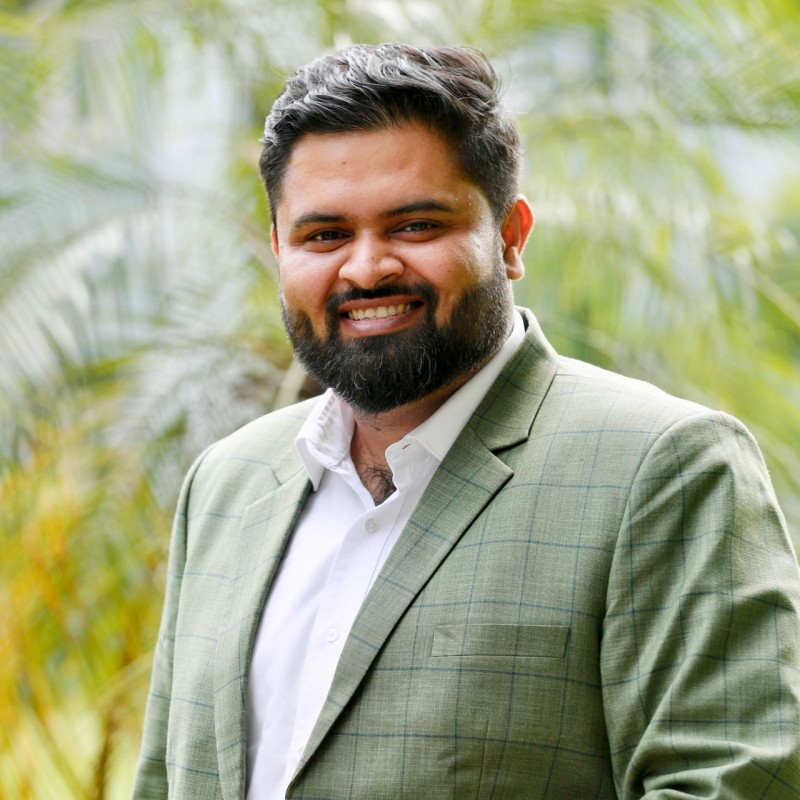
Author: Vivek Malik, PhD Scholar, Strategy, Innovation & Entrepreneurship, BIMTECH, Greater Noida
References
Arusha, A. R., et al. (2020). Prevalence of stress, anxiety and depression due to examinations among tertiary
level students in Bangladesh. NCBI/PMC Mental Health Review. PubMed Central.
Correlation between anxiety scores and academic performance among adolescent students in Sudan. (2025). Journal of Public Health Research, 75(18). PMC Database.
Deb, S., Strodl, E., & Sun, J. (2015). A study on the effect of examination stress on the mental health of
Indian high school students. International Journal of Indian Psychology, Special Edition.
Dweck, C. S., Walton, G. M., & Cohen, G. L. (2014). Academic tenacity: Mindsets and skills that promote
long-term learning. White Paper. Gates Foundation.
Fazel, M., et al. (2014). Mental health interventions in schools in high-income countries: A systematic
review. The Lancet Psychiatry, 1(5), 377–388.
Barbayannis, G., et al. (2022). Academic stress and mental well-being in college students. Frontiers in
Psychology, 13, Article 886344.
Nielsen, L., et al. (2024). ABCs of mental health at university: Intervention for well-being. Frontiers in
Public Health. Complex Intervention Framework for University Mental Health Promotion.
Vinueza-Fernández, I., et al. (2025). Anxiety, academic performance, and physical activity in university
students: A scoping review. Anxiety and Performance Research Quarterly.
Anxiety & Depression Impact on Academic Performance. (2025). South Indian Journal of Mental Health
Sciences, 3(2), 45–62.
Gunawardena, H., et al. (2024). Australian school interventions for child mental disorders: A systematic
review of long-term benefits. Frontiers in Psychology.
Oti, O., et al. (2021). Online mental health for students: User-centered perspective. Science Direct Mental
Health Digital Interventions.